

Die nachfolgenden Artikel sind von commondreams.org und werden mit Hilfe eines Feedreaders geladen. Durch Klicken der Artikelüberschriften gelangst Du direkt zum Artikel auf der Website von commondreams.org.
Common Dreams Common Dreams
- After Trump Says Democrats Could Deliver Healthcare Deal, Sanders and El-Sayed Invite Him to ‘Guarantee’ It for All
 von Julia Conley am Freitag, 20. November 2026 um 22:35
President Donald Trump’s comments on healthcare and working with the incoming Democratic majorities in the US Congress on Friday left one progressive media outlet wondering: “Has he heard Abdul El-Sayed’s proposal to call Medicare expansion/Medicare for All ‘Trumpcare’ to get it passed?“At a press conference with Vice President JD Vance, Secretary of State Marco Rubio, and White House Chief of Staff Stephen Miller, Trump spoke about opportunities for bipartisan legislation to pass on Capitol Hill after the new Congress is sworn in early next year. He identified legislation to incentivize film and TV companies producing content in the US and college regulations as areas where Republicans and Democrats could come to agreements, as well as saying he was “open to great healthcare.”“Can it be what they want?” said Trump, referring to the Democrats. “No, but it can be a combination of what we all want. We could end up with great healthcare in our country. We could end up better than dealing with just the Republicans. We’ll have tremendous Republican support.“Trump on the new Democratic majorities: “We could end up with great healthcare in our country. We could end up better than dealing with the Republicans.” https://t.co/Am2FFRxgCm— Aaron Rupar (@atrupar) November 20, 2026Following two years of Republican control in the US Senate and House of Representatives during the first half of Trump’s second term, 10 million people are expected to lose health coverage by 2034 due to the GOP’s Medicaid cuts, and an estimated 4.6 million people have lost their coverage through the Affordable Care Act after the Republicans allowed ACA subsidies to expire. A report released by the Center for Economic and Policy Research found this week that 26 million Americans lacked health coverage last year. Progressives including Sen. Bernie Sanders (I‑Vt.) and El-Sayed, a Democratic senator-elect from Michigan who made a call for Medicare for All a central plank of his campaign, have argued that Democrats can indeed come up with a better healthcare plan than Republicans have over the past two years, and have called on the party to take decisive action to deliver a government-run healthcare plan by expanding Medicare to everyone in the US. A KFF poll released before the elections found that 66% of Americans were supportive of the idea, which would put the United States’ healthcare system in line with those in other wealthy nations. Sanders expressed appreciation for Trump’s comments Friday and said he looks “forward to working” with the president. “Our job now is to do what every other major country does: guarantee healthcare to all as a human right and substantially lower the cost of prescription drugs,” said the senator, who has advocated for single-payer healthcare for decades and has seen the proposal grow in popularity since his presidential runs in 2016 and 2020. El-Sayed has suggested using the president’s fondness for creating monuments to himself and his family name to the advantage of all Americans who would benefit from a government-run healthcare system, by calling the program Trumpcare. “Trumpcare for All?” the senator-elect said on social media following the president’s remarks.
- ‘Not One Dollar’: Watchdog Says Lawmakers Must Make Clear No Industry Bailouts When AI Bubble Bursts
 von Brad Reed am Freitag, 20. November 2026 um 21:10
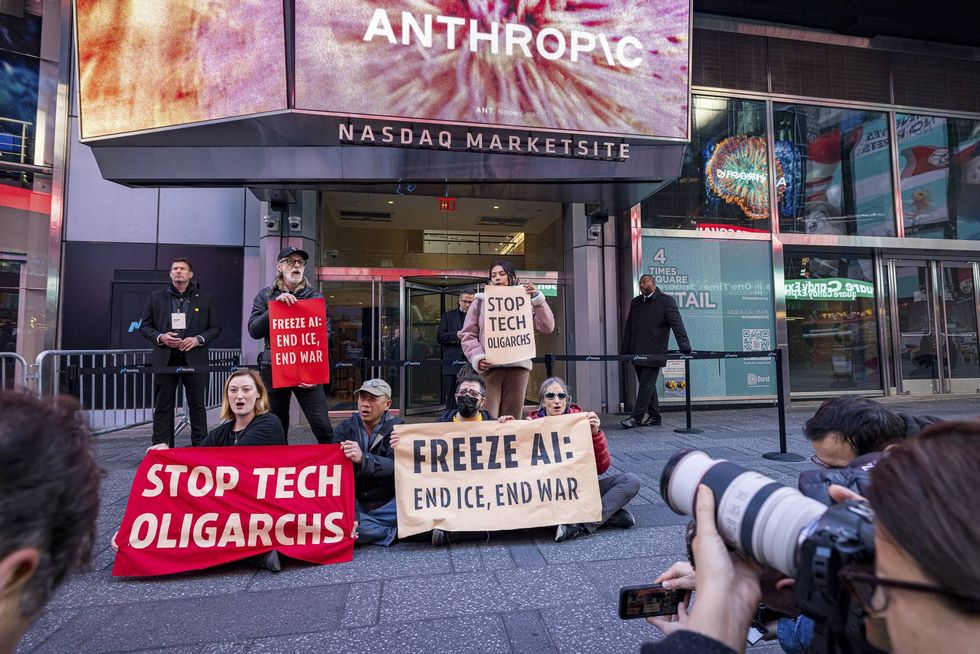
A government watchdog on Friday demanded that the US government draw a firm line in the sand against bailing out Big Tech companies when the financial bubble within the artificial intelligence industry bursts.As the values of technology stocks plunged during Friday trading, Jeff Hauser, executive director of Revolving Door Project, warned that the AI industry could soon seek taxpayer financing to stay afloat.An AI bailout would be particularly outrageous, Hauser explained, because of how recklessly the AI industry has behaved for several years.“The AI industry did not consult the public in its disastrous financing, in fact it often aggressively obscured the details from communities and sought to trample democratic oversight,” said Hauser. “This disastrous speculative bubble has siphoned off enormous amounts of public money already, poisoned communities, eroded cyber infrastructure, and derailed the work of moving to a green economy.“Hauser urged lawmakers to go on the record to rule out any possibility of taxpayer assistance for Big Tech.“The public has already subsidized more than its fair share of the costs of this boondoggle,” he said. “So when the industry comes hat in hand begging for us to save them from themselves, the message must be unequivocal: not one dollar more.“Concerns about an AI bubble have grown in recent weeks after the ouster of Jensen Huang, the former CEO of top AI chip manufacturer Nvidia, who stepped down after it was revealed he had affairs with two subordinates, as well as with a woman suspected of being a spy for the Chinese government.Reuters reported on Friday that the Securities and Exchange Commission has begun “scrutinizing potential accounting issues” at Nvidia, sending the company’s shares tumbling by more than 12%.The large sell-off in tech stocks comes just one day after frontier AI lab Anthropic held an initial public offering (IPO), with shares selling for $112 at opening.The euphoria of the successful IPO lasted less than a day, however, as Anthropic shares have since lost more than 20% of their value.
- Tlaib Says Democratic Majority Must Fight to End Trump’s ‘Strangling’ of the Cuban People
 von Stephen Prager am Freitag, 20. November 2026 um 20:55
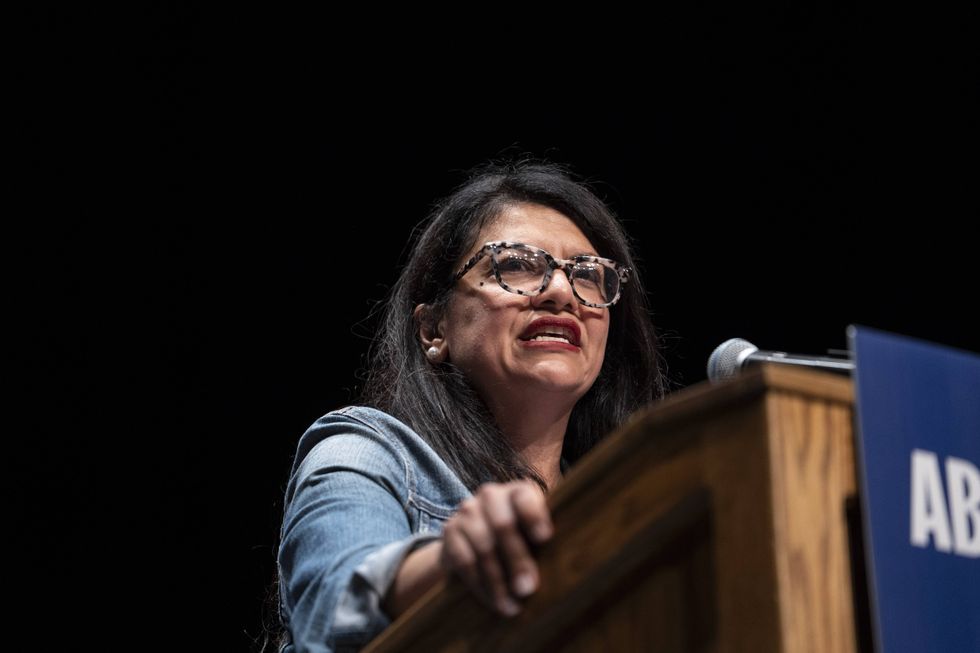
As President Donald Trump renews his threats to invade Cuba, US Rep. Rashida Tlaib said Friday that the incoming Democratic majority in Congress must move to block military action, end Trump’s fuel blockade, and lift the US embargo that has inflicted decades of suffering on the Cuban people.“The Trump administration is strangling the Cuban people,” Tlaib (D‑Mich.) wrote on social media Friday. “Our new Democratic majority must act immediately to end Trump’s fuel blockade, block military action, and finally end the embargo that has inflicted economic warfare against Cuba for over half a century.“The Trump administration is strangling the Cuban people. Our new Democratic majority must act immediately to end Trump’s fuel blockade, block military action, and finally end the embargo that has inflicted economic warfare against Cuba for over half a century.https://t.co/eyakBu2p90— Congresswoman Rashida Tlaib (@RepRashida) November 20, 2026The US embargo has stifled Cuba’s economic growth for more than six decades. In January, Trump imposed a fuel blockade as part of his effort to oust Cuba’s communist government. The blockade has deepened the suffering of the island’s roughly 9.4 million residents.Power outages were already frequent on Cuba’s aging electrical grid. Since the fuel blockade began, they have become catastrophic. The country has suffered at least seven major blackouts this year alone.The United Nations reported in May that more than 100,000 patients, including 11,000 children, were still waiting for surgery. In June, Cuban state media reported that nearly 3,000 dialysis patients had experienced disruptions to their treatment.About 3.5 million people have faced water shortages as electric pumps lose power, prompting the US embassy to warn of an increase in diarrheal illness. Energy shortages have also disrupted food production and transportation, left families unable to refrigerate food, and forced hospitals to operate without reliable electricity.Cuba’s embassy in Washington, DC has called the fuel blockade “collective punishment,” and human rights organizations have said it violates international law.Earlier this month, Trump tightened the blockade further, expanding sanctions to any country or individual that operates within Cuba’s electronics, manufacturing, maritime, or technology sectors.Trump has described his blockade as part of an effort to bring about a “friendly takeover” of Cuba by the United States. After launching the blockade in January, he said he believed he would have the “honor” of “taking Cuba” and hinted at military action against the island once the war with Iran ended.Earlier this month, days after Republicans suffered a resounding midterm defeat in large part thanks to his Iran War, Trump said he’d “certainly consider” using military force to overthrow the government of Cuba, which he called a “failed” state.He said he wanted to “get Cuba done” before leaving office in 2029, adding that Secretary of State Marco Rubio, a longtime Cuba hawk who has pushed for the government’s overthrow, “would love to do it.”HEWITT: Will you order military force to free Cuba?TRUMP: I want to get Cuba done before I leave, yeah https://t.co/ApdFutnbog— Aaron Rupar (@atrupar) November 12, 2026In an op-ed for the Los Angeles Times, Michael Galant, a senior research and outreach associate at the Center for Economic and Policy Research, argued that congressional Democrats should make ending the blockade a priority when they take power.“This fuel blockade is cruel. It is illegal. It is an act of war. It is unpopular—on the world stage and among US voters. It may even be a national security risk,” Galant wrote. “With the new balance of power, Congress has the tools to confront it.“Galant urged Congress to start by voting on a war powers resolution barring the unauthorized use of military force against Cuba, including the blockade.Gallant wrote that, “Come 2027, the new Congress could pass this and other discrete measures to help end the deprivation: terminating the January national emergency declaration, on which many of the recent sanctions rest; removing Cuba’s baseless ‘State Sponsor of Terrorism’ designation, which effectively cuts off the country from the global financial system; and suspending Helms-Burton Title III authorities, which allow third parties to sue individuals who ‘traffic’ in property confiscated by the Cuban government.”He added that Democrats could make it harder for Trump to veto these measures by attaching them to “must-pass” legislation such as the annual defense authorization bill.Ending Trump’s strangulation of Cuba was the immediate priority, but Democrats “should not stop at rolling the clock back to 2024,” Galant wrote. He argued that “it is well past time to end the embargo that has been intentionally harming Cuban civilians for more than 60 years.”Trump’s illegal blockade is inflicting a humanitarian catastrophe on the Cuban people. It’s Gaza in slow motion.And now he’s threatening to invade, too?! Let’s let the Cuban people write their own future—NOT politicians in Washington. https://t.co/E3gliEgrpJ— Rep. Jim McGovern (@RepMcGovern) November 19, 2026In a rousing speech Wednesday, Rep. Jim McGovern (D‑Mass.) urged his colleagues to end both Trump’s fuel blockade and the US embargo. Earlier this year, he cosponsored a Cuba war powers resolution introduced by Rep. Nydia Velázquez (D‑NY).“Cuba is our neighbor. Our histories are intertwined. Our futures are, too. The 10 million Cubans on the island are just like us. They go to school and work, raise families, and live their lives. They crave freedom and justice,” McGovern said. “The Trump administration is trying to starve them out, like Leningrad in 1942 or Gaza in slow motion.”“We hear of plans for military attack, an Iran war in the Caribbean. Cuba belongs to the Cuban people, not to Marco Rubio’s cabal of ideologues,” he continued. “Rubio, the viceroy of Venezuela, wants to be the caudillo of Cuba. True liberation demands that we drop the US embargo, whose 60 years of inefficacy is matched only by its cruelty.”“If Trump and Rubio want to invade Cuba, they must come to Congress and seek its approval,” he said. “They must explain to the American people, who just voted resoundingly against endless war, why they must pay for another. Trade and diplomacy, not war, will liberate the people of Cuba.”
- Court Temporarily Blocks Trump EPA’s Permit for Army to Detonate Toxic Lead Explosives in Iowa Town
 von Julia Conley am Freitag, 20. November 2026 um 20:09
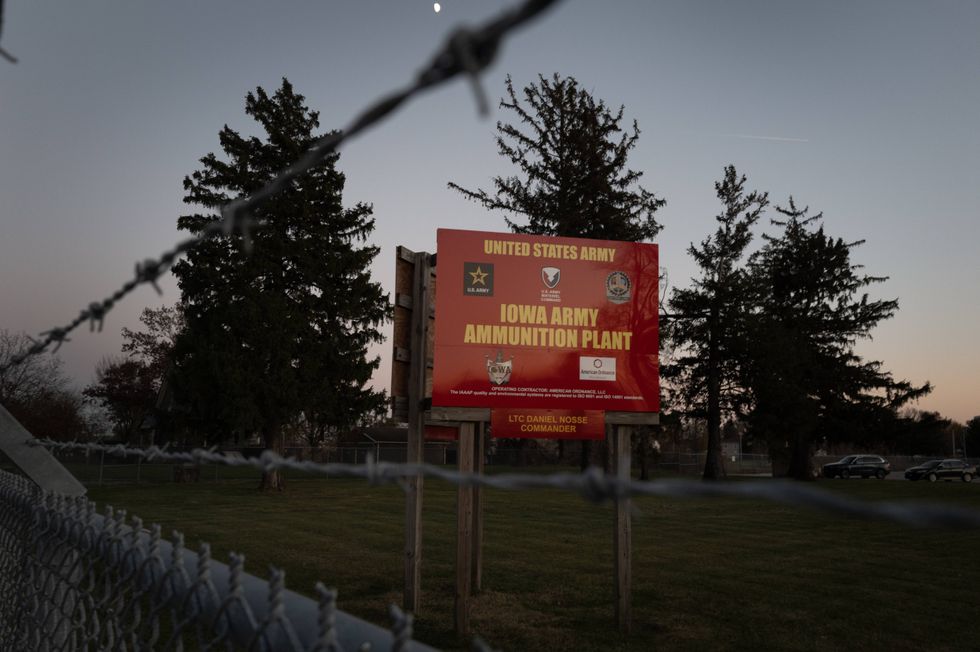
A federal appeals court was considering a long-term halt on Friday to a plan by the US Army to detonate about five tons of aging, toxic lead-based explosives at a munitions plant near Middletown, Iowa, after issuing a temporary suspension of the US Environmental Protection Agency’s permit, which had been for Monday. In a one-sentence order, the US Court of Appeals issued a stay on the permit after the environmental legal group, Earthjustice, filed a lawsuit Thursday on behalf of the Iowa Environmental Council (IEC) and the Sierra Club Iowa chapter. The IEC told Iowa Public Radio that the court could still allow Monday’s detonation to go forward—an action that would send a toxic plume of lead dust into the air that could travel up to 100 miles north of the Iowa Army Ammunition Plant, as well as putting Middletown’s population of about 360 people at risk. The lawsuit filed Thursday said the EPA and the US Army had not conducted a full review of other potential disposal methods for the lead azide, which the Army has said has become unstable and is sensitive to shock and friction, increasing the risk of an uncontrolled explosion.The detonation was originally set for Friday, but was postponed to Monday after outcry from the organizations and local political leaders, including Democratic Gov.-elect Rob Sand and senators in neighboring Illinois. View on X “The American people deserved better than this,” said Sen. Tammy Duckworth (D‑Ill.) after acting Army Secretary Adam Telle announced the postponement, which he said was now scheduled for the “latest possible moment” that the operation could take place before temperatures drop and make the lead azide more unstable. “This whole operation was poorly planned and poorly communicated,” said Duckworth. “Families were abruptly told to avoid the area, unsure if they would return to broken homes and whether their air and water could be at risk due to toxic lead exposure. This was unacceptable and a failure of leadership of epic proportions. Moving forward, I will continue to demand answers about how we even got to this point and accountability to make sure the Army never allows unsafe conditions to get this dire again.“Earthjustice noted that the lead dust may “linger on yards, gardens, and play areas for years” after the explosion. Even small amounts of lead exposure can permanently damage a child’s developing brain, and 400,000 deaths are attributed to lead each year, including from cardiovascular disease. Exposure for pregnant people can also cause premature births.The Army published a public notice of the detonation, which required an evacuation of the surrounding town, just five days before before it was set to go forward. “The Army left 68 drums of a primary explosive to degrade for 20 years until it decided that the only safe option was to blow them up near populated areas. That turned the Army’s storage management failure into a public health catastrophe for people in at least two states,” said Earthjustice attorney Thien Chau. “Instead of keeping people safe, the Army is knowingly blanketing communities with lead and putting the burden on families to understand and mitigate the risks of the massive plume of lead dust.”Wally Taylor, attorney and legal chair for the Sierra Club’s Iowa chapter, said it was “obvious that the Army is proceeding recklessly with this action.”“Iowans,” said Taylor, “deserve to see an environmental and health impact statement and investigation into better alternatives than this extreme planned explosion.”
- ‘Sadness, Heartbreak, and Disbelief’ as COP31 Enters Overtime With Draft Deal Called Big Oil ‘Wish List’
 von Jessica Corbett am Freitag, 20. November 2026 um 19:49
As the United Nations Climate Change Conference in Antalya, Türkiye entered overtime on Friday, advocates of heeding scientists’ calls to rapidly phase out planet-heating fossil fuels intensified pressure on governments to end the trend of previous summits and wrap up COP31 with a truly ambitious agreement.Reuters reported from the summit that Ralph Regenvanu—climate minister of Vanuatu, a South Pacific island nation that faces rising seas and worsening storms—warned, “We can see where it’s going, and it’s not going to be a high-ambition text.“The latest cover decision draft, released Thursday, the eve of when the conference was supposed to conclude, cut language on the “transition away from fossil fuels,” and instead calls for a “transition towards low greenhouse gas emissions and climate-resilient development.” It also eliminated a reference to the $120 billion needed for climate finance for the Global South by 2035. View on X “I’m struggling to find the words for the sadness, heartbreak, and disbelief I feel watching what is unfolding at COP31. How is this possible?” said Kumi Naidoo, president of the Fossil Fuel Non-Proliferation Treaty Initiative and founding chair of Africans Rising for Justice, Peace, and Dignity.“What breaks my heart is that we know what is at stake,” he stressed. “People are losing their homes, their livelihoods, and their lives. Communities are struggling to hold on to places that have sustained their cultures for generations. Entire countries are fighting for their survival.“Naidoo declared: “Imagine Alcoholics Anonymous spending 30 years negotiating and producing a statement that never mentions alcohol. Now imagine the alcohol industry turning up as the largest delegation and helping shape the outcome.“Texas Tech University professor Katharine Hayhoe similarly said, “A climate deal that leaves out fossil fuels is like a plan to quit smoking that never mentions cigarettes.” View on X Some government representatives at the summit are also frustrated. UN News reported Friday that “led by France and Panama, ministers and representatives from across the world including Belgium, Côte d’Ivoire, Finland, Greece, Guatemala, Spain, Sweden and Vanuatu, joined forces to demand stronger climate action.“That coalition of countries’ six priorities for a COP31 agreement are:Science: Ensure that climate decisions are firmly grounded in scientific evidence. Fossil fuels: Explicitly recognize the need for a clear and orderly transition away from fossil fuels. Climate finance: Require those most responsible for emissions to contribute fairly to financing climate action. Clean electrification: Accelerate the shift towards electricity generated from renewable, clean energy sources. Methane: Speed up reductions in methane emissions, one of the quickest ways to slow global warming. International cooperation: Strengthen coordination between the three Rio Conventions on climate change, biodiversity, and desertification.Separately, in a letter obtained by Politico, the European Union warned that COP31 is at risk of turning into a “fossil fuel summit,” and the latest draft text would be “perceived as a retreat from previous commitments, and as disproportionately accommodating the interests of continued fossil fuel production and consumption.“The 27-member bloc’s climate commissioner, Wopke Hoekstra, and Ireland’s climate minister, Darragh O’Brien, wrote that “the EU must be clear that it cannot join consensus on a package that would represent a substantive step backwards for global climate action.“Laurie van der Burg, global public finance lead at the advocacy group Oil Change International, responded that “the EU is trying to shift blame onto others and it is deeply hypocritical. While we welcome calls to reaffirm the commitment to transition away from fossil fuels, the EU did not show the leadership needed to deliver it. At the beginning of COP31, it signaled it was prepared to drop the renewables ask from the electrification target and it has failed to put forward an EU fossil fuel transition roadmap.” “Even worse, the EU blocked progress on the public finance, adaptation, and just transition that developing countries urgently need,” she noted. “These are not side issues. They are essential to making a fair fossil fuel phaseout possible and protecting communities from climate disasters. The EU came to COP31 with a hardline position on finance showing no willingness to be constructive. The EU is cowardly trying to deceive and frame the outcome of this COP, but it’s obvious: the EU is pointing fingers at others while refusing to show any leadership itself.” View on X Oil Change has also sounded the alarm about the inclusion of language on carbon capture and storage (CCS) and carbon removal in the draft, with global policy lead Romain Ioualalen declaring that “governments must stop treating the cover decision text like a fossil fuel executive’s wish list. We are running out of road, and the latest text shows just how far governments have allowed fossil fuel interests to steer the negotiations off course.”“An outcome that should fast-track a fair and funded transition away from fossil fuels instead opens the door to more fossil gas, and gives dangerous credibility to disproven technologies like CCS that will trap us in our dependence on the volatile fossil fuel economy,” he added. “These CCS paragraphs are a real and immediate danger to the energy transition and need to be removed. This isn’t a pathway out of the crisis. It’s a license to prolong it. Governments have a last chance to turn this around.” View on X Fanny Petitbon, policy analyst at the group 350.org, similarly said that “carbon capture is the biggest scam in the era of overshoot, and our leaders could be very much falling for it. Taken together, these paragraphs would lock in decades more fossil fuel use and pull money and attention away from the solutions that already work: renewables, efficiency and a just transition away from fossil fuels. We cannot let unproven technologies distract from what science demands: a fast, fair and full phaseout of fossil fuels.“Recent studies have found that temporarily surpassing the Paris Agreement’s 1.5°C threshold for temperature rise this century, relative to preindustrial levels, is now inevitable, and the world is headed for “an irrecoverable overshoot” of that target unless governments “rapidly reduce emissions to limit both the magnitude and duration.“There have been various positive developments at the summit in Antalya, from the Ministerial Declaration on Accelerating Action on Super Pollutants and the launch of the Global SF6 Pledge, to $30 million in new investments in the Global Fund for Coral Reefs, but activists like Fenton Lutunatabua, 350.org’s Pacific and Caribbean lead, remain worried about the final deal.“For the Pacific, 1.5°C is the last line of defense,” Lutunatabua said. “The latest COP31 cover decision has eliminated all mention of the transition away from fossil fuels. These may just be words to you, but to us they represent the line between survival and extinction. The Pacific cannot be remembered as what the world allowed to disappear. This is a final call on world leaders to save their COP31 legacy: Secure an outcome aligned with 1.5°C, set the roadmaps for a fossil fuel phaseout, and fund our futures. For us, this is nonnegotiable.”
- Experts to Incoming Congress: Minimum Wage Increase Must Be ‘Core Element’ of Affordability Agenda
 von Jake Johnson am Freitag, 20. November 2026 um 19:38
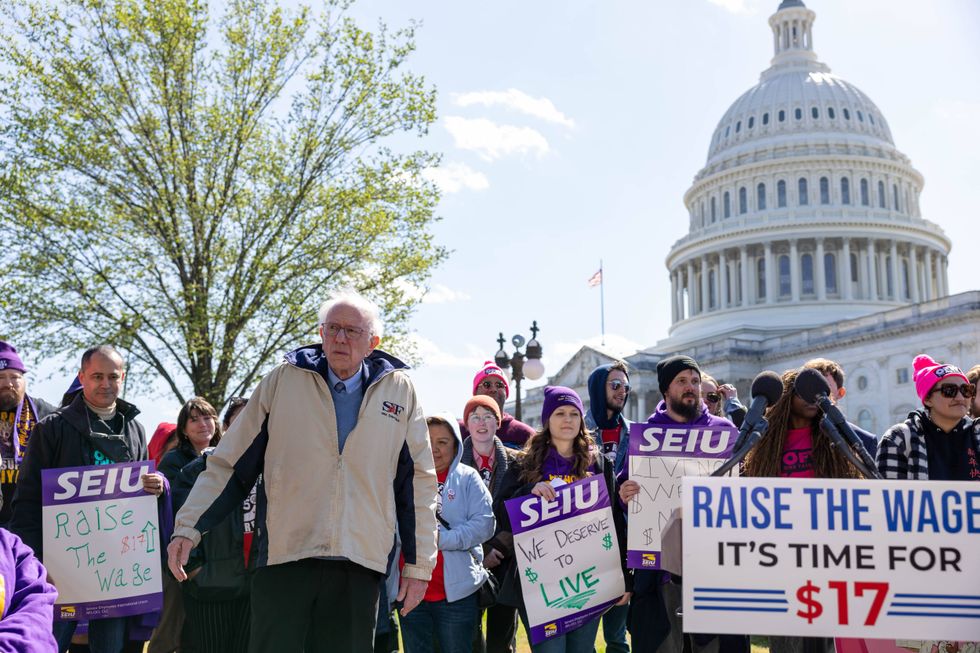
A group of economic policy experts argued Thursday that raising the federal minimum wage—which lawmakers haven’t increased in nearly two decades—must be an integral part of the incoming Democratic Congress’ affordability agenda.Celine McNicholas, Samantha Sanders, and Ben Zipperer of the Economic Policy Institute (EPI) noted that the federal minimum wage, $7.25 an hour, is at “its lowest real value in 77 years” and “is a major driver of the affordability crisis facing low-wage workers.“While many states—thanks to massive grassroots pressure—have moved to raise their wage floors to at least $15 in the coming years, the EPI experts stressed that 55 million US workers still live in states where the federal minimum prevails.“Earlier this year, EPI released a report calling on Congress to raise the federal minimum wage to two-thirds of the national median wage—equivalent to roughly $17.50 today, and a projected $20 in 2030,” the experts noted. “Our proposed benchmark would lift pay for nearly 40 million workers, about a quarter of the workforce. It would also eliminate poverty wages and move the federal floor toward a living wage in much of the country, so that a single adult working full-time could cover modest expenses in half of US counties.”“Raising the minimum wage is the single quickest policy to improve affordability for the greatest number of workers,” wrote McNicholas, Sanders, and Zipperer. “Time and time again, minimum wage increases have raised wages with little-to-no effect on the number of jobs. The income increases they generate are transformative for low-income families and far outweigh the small effects they have on prices.”“The 120th Congress has the chance to advance a true affordability agenda that raises wages for US workers,” they added. “A core element of that agenda must be raising the federal minimum wage. This should be achievable, considering that more than a third of the newly elected members of Congress called for raising the minimum wage in their campaign platforms.“The EPI experts’ analysis came a day after Sen. Bernie Sanders (I‑Vt.) listed a federal minimum wage hike as one of his top legislative priorities in the new Congress, in which he is set to lead the Senate Health, Education, Labor, and Pensions Committee.Sanders said Wednesday that the current $7.25 federal minimum wage is “totally absurd.” The senator said he would propose incrementally raising the federal wage floor to $20 an hour “over a period of years.”
- Ro Khanna Explains ‘What’s Really Going On’ With Series of Tech Outages
 von Brad Reed am Freitag, 20. November 2026 um 18:47
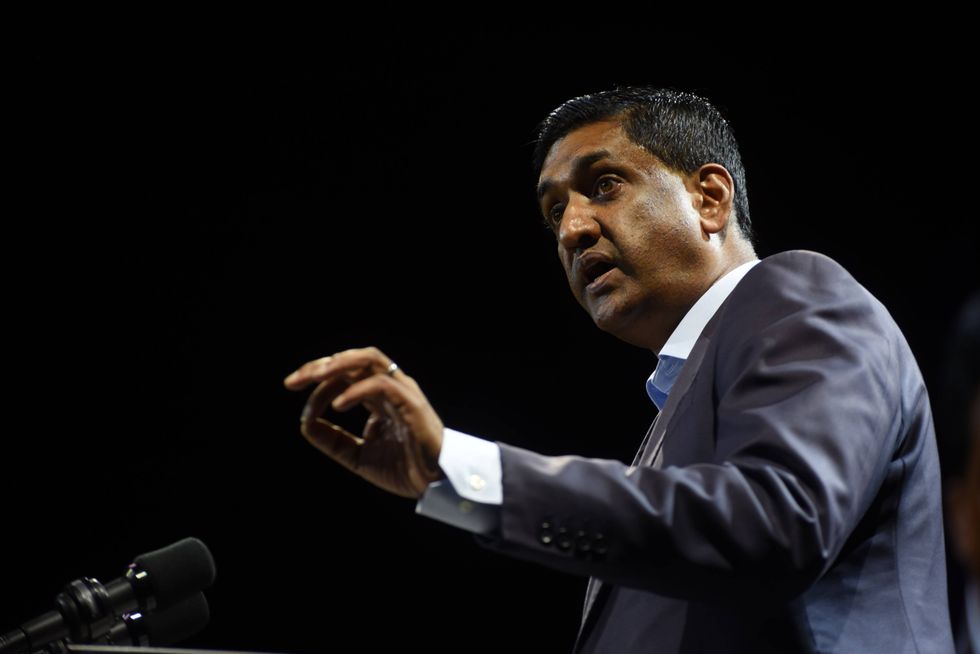
With a number of outages hitting American aviation systems and banks over the last week, Rep. Ro Khanna took to social media to explain what’s been going on.In a video posted on Thursday, the California Democrat pointed to the recent release of a Chinese open-source artificial intelligence model called GLM 5.3, which he noted “does not have safeguards and can be used to have cyberattacks,” which has led to many institutions rushing to upgrade their systems.“The rate of patching… has increased dramatically since GLM 5.3 was released,” he said. “When you have this increasing in patching, you have many more chances for outages. That’s why we’re seeing all of these outages across the country.“There is a cloud of confusion about the tech outages.Here is what’s really going on: https://t.co/vH8is7o3oT— Ro Khanna (@RoKhanna) November 19, 2026Khanna pointed fingers at President Donald Trump’s administration for being caught flat-footed by the outages and not explaining their cause to voters.“The president of the United States needs to direct… [the Cyber Infrastructure Agency] to take charge,” Khanna said. “That agency has been totally cut. They need to restaff it, they need to have a director… and that director needs to coordinate with all of the companies and agencies to have a plan for how we increase our patching.“Khanna then said either the president or one of his deputies should give daily briefings updating the country about cybersecurity threats, while also gathering a broad coalition of government, business, and technology leaders to “upgrade our patching system against the increased AI threat.”“This is not a time for slogans,” Khanna said. “This is not a time for politics. It’s a time that we actually understand the issue and provide leadership.“Khanna’s claims about GLM 5.3 being the primary driver of system upgrades mirrored an analysis published earlier in the week by investment firm Bridgewater Associates.As reported by MarketWatch on Thursday, Bridgewater’s analysis found that a surge in cyberattacks coincided with the release of GLM 5.3, which is far cheaper to use compared to AI models developed by OpenAI and Anthropic.“We are in the middle of an arms race where malicious actors are using agents to find exploitable bugs and defenders are using agents to preemptively find and patch vulnerabilities,” the firm explained. “While models have significantly accelerated work on both sides of the ledger, the defenders have the much heavier burden of patching all bugs before they can be exploited.”
- ‘Beyond Weak Enthusiasm’: Poll Reveals Just 17% of Democrat Voters Want Schumer to Lead Senate
 von Brett Wilkins am Freitag, 20. November 2026 um 18:16
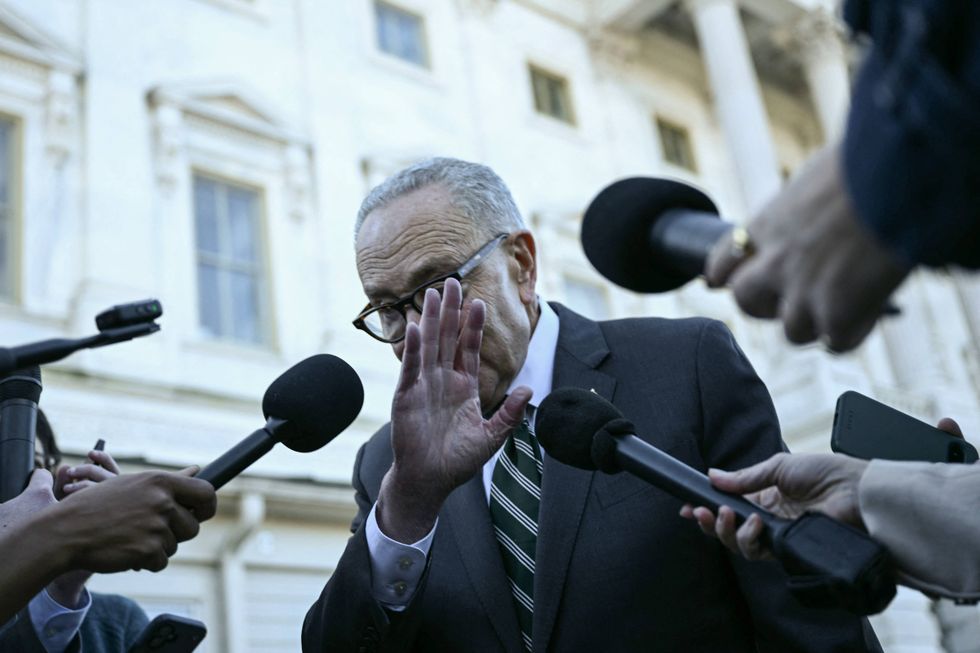
Only around 1 in 6 Democratic voters want Senate Minority Leader Chuck Schumer to remain their party’s leader in the upper chamber of Congress, according to a new poll released Friday, as the longtime incumbent faces a leadership challenge from progressive Sen. Chris Van Hollen following the midterm elections.The survey of 800 Democrats and Democratic-leaning adults, conducted by Verasight for Labyrinth Insights from November 11–16, found that 17% supported Schumer (D‑NY) for majority leader, while 57% wanted someone else, and 26% were unsure who they preferred to lead the upper chamber.The findings reflect widespread dissatisfaction with the party’s leadership, even after Democrats’ midterm “blue tsunami.” And it isn’t just progressives who want change: Among respondents who voted for former Vice President Kamala Harris in 2024, 61% said they favor a different Senate leader.Opposition to Schumer—who was first elected to Congress when Jimmy Carter was still president—was particularly strong among younger Democrats, with 57% of respondents ages 18–29 saying they wanted to replace him, compared with just 10% who wanted him to stay. View on X The poll also affirmed voters’ frustration with corporate Democrats. Asked whether party leaders have been too friendly toward big corporations, 42% said they were, compared with 33% who said the party’s approach was about right, and just 6% who thought Democrats were not friendly enough.Van Hollen (D‑Md.) has won the support of voters seeking change—especially progressives—with positions like backing Medicare for All, restricting US military aid to Israel, and ending congressional funding for President Donald Trump’s illegal war of choice against Iran.In a head-to-head matchup, the survey found that Van Hollen led Schumer 36% to 19%, although 45% of respondents said they were undecided.“For Schumer, these findings go beyond weak enthusiasm: An outright majority wants another Senate leader, and Van Hollen gets more support when named as an alternative,” Labyrinth Insights said, adding that “lack of affirmative support demonstrates that the party’s supporters want meaningful change.“The poll’s findings follow a separate survey by Data for Progress, which found that 53% of Democrats and Democratic-leaning independent voters wanted a new Senate leader, compared with 42% who wanted Schumer to remain.


